
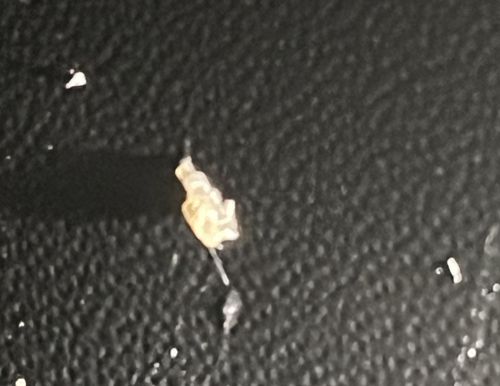
Community identification
Human Head Louse
Pediculus humanus capitis
- Order & Family
- Order: Psocodea (formerly Phthiraptera), Family: Pediculidae
- Size
- 2 to 3 mm in length (roughly the size of a sesame seed).
Natural Habitat
Exclusively on the human scalp and hair, often concentrated behind the ears and at the nape of the neck.
Diet & Feeding
Obligate hematophages; they feed exclusively on human blood several times a day.
Behavior Patterns
They are wingless and cannot jump or fly; they move by crawling from hair to hair. They attach their eggs (nits) to hair shafts near the scalp with a glue-like substance. They can only survive for 24-48 hours off a human host.
Risks & Benefits
Risks include intense itching (pruritus due to allergic reactions to saliva), sleep loss, and secondary bacterial infections from scratching. They are not known to transmit systemic diseases. There are no ecological benefits to humans; they are considered parasitic pests.