
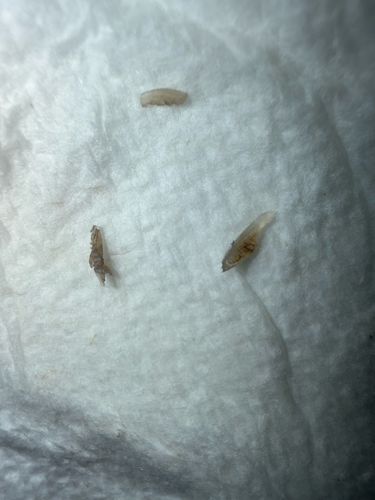
Community identification
Fly larvae (Maggots)
Family Muscidae, Family Calliphoridae, or similar
- Order & Family
- Order Diptera; Families include Muscidae (House flies), Calliphoridae (Blow flies), or Sarcophagidae (Flesh flies)
- Size
- 3 mm to 12 mm depending on the species and stage of development.
Natural Habitat
Typically found in decaying organic matter, garbage, feces, rotting meat, or moist environments with high organic content.
Diet & Feeding
Scavengers that feed on liquefying organic material, decomposing tissues, or bacterial films.
Behavior Patterns
Larvae follow a three-stage (instar) development process; they are light-avoidant (photophobic) and use hook-like mouthparts to feed before migrating to a drier area to pupate.
Risks & Benefits
Risks include the transmission of bacteria (e.g., Salmonella, E. coli) and potential for myiasis if they infest living tissue. Benefits include roles as decomposers in the ecosystem and use in forensic entomology to determine time of death.