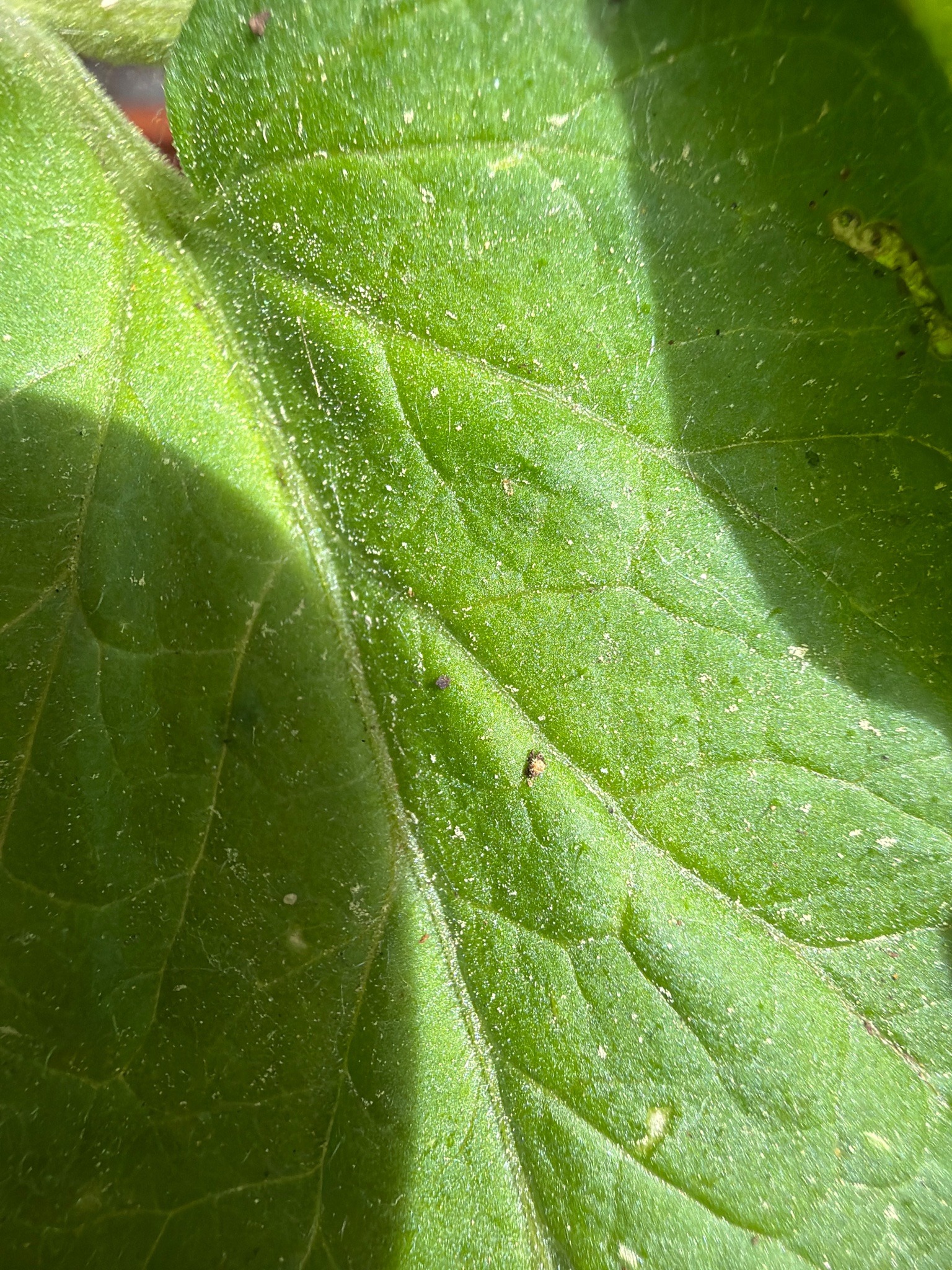
Tetranychid Mite (Likely Two-spotted Spider Mite)
Scientific Name: Tetranychus urticae
Order & Family: Order: Trombidiformes; Family: Tetranychidae
Size: 0.3 to 0.5 mm (nearly microscopic, often appearing as tiny moving dots)
Natural Habitat
Under surfaces of plant leaves, particularly in hot, dry environments such as gardens, greenhouses, and indoor houseplants
Diet & Feeding
Plant sap specialist; feeds by piercing leaf cells with its mouthparts to suck out the contents, resulting in characteristic stippling
Behavior Patterns
They often produce fine silken webbing on the undersides of leaves and between stems. They reproduce extremely rapidly in warm conditions, with life cycles completing in as little as 5 to 7 days
Risks & Benefits
Major agricultural and horticultural pests that can cause significant damage to foliage, leading to yellowing, leaf drop, and plant death. They pose no direct risk to humans but can devastate a wide range of crops and ornamental plants
Identified on: 6/9/2026