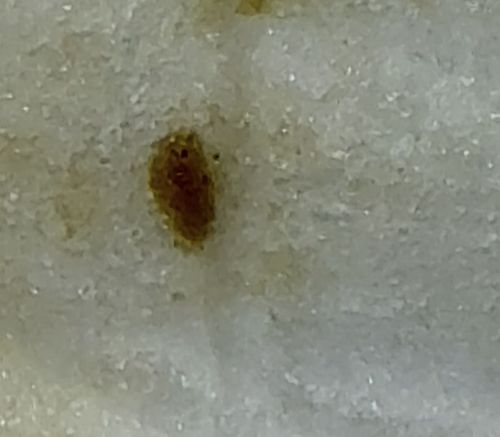
Mold Mite
Scientific Name: Tyrophagus putrescentiae
Order & Family: Sarcoptiformes; Acaridae
Size: Microscopic; typically 0.28 mm to 0.45 mm long (the size of a speck of dust).
Natural Habitat
Typically found in stored food products high in moisture, kitchens, and pantries; often thrives on cheese, grain, flour, dried meat, and decaying organic matter.
Diet & Feeding
They feed on fungal mold growing on food sources, as well as the food product itself, particularly items rich in protein like cheese, ham, and grain flours.
Behavior Patterns
They reproduce rapidly in humid, warm conditions. Large populations appear as a moving dust layer on surfaces. They are phototactic (attracted to light) but prefer high humidity environments to survive.
Risks & Benefits
Generally harmless to humans but can cause allergic reactions (dermatitis) in sensitive individuals known as 'grocer's itch.' They contaminate food, rendering it unpalatable due to a distinct 'minty' smell and accumulation of molted skins.
Identified on: 2/7/2026