
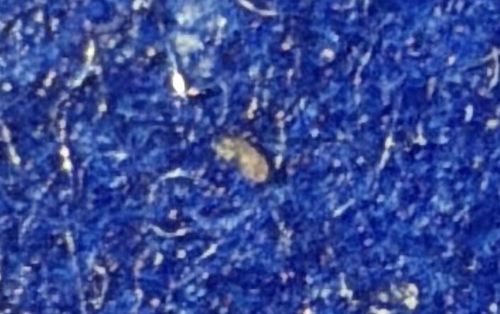
Dust Mite
Dermatophagoides pteronyssinus (European) or Dermatophagoides farinae (American)
- Order & Family
- Order Sarcoptiformes, Family Pyroglyphidae
- Size
- Microscopic; typically 0.2 to 0.3 millimeters in length and translucent.
Natural Habitat
Thrives in warm, humid indoor environments, specifically in bedding, mattresses, carpets, upholstered furniture, and curtains where dust accumulates.
Diet & Feeding
Primarily feeds on dead human skin scales (dander) that have been shed, as well as fungal spores.
Behavior Patterns
Dust mites are distinct from insects (they are arachnids) and have a simple life cycle from egg to larva to nymph to adult. They prefer relative humidity above 50% to survive. They do not bite or sting but simply wander through fabric fibers feeding.
Risks & Benefits
They pose a significant allergy risk to humans. Their feces and decaying body parts are a major trigger for asthma, rhinitis, and eczema. They offer no direct benefit to humans other than being part of the microscopic decomposition ecosystem.