
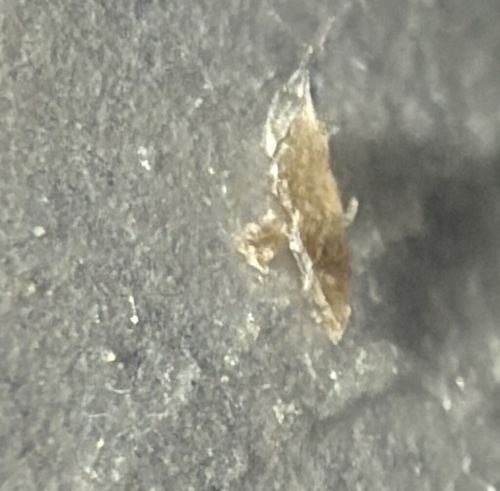
Body Louse or Head Louse (Nit case/Exuvia)
Pediculus humanus
- Order & Family
- Phthiraptera: Pediculidae
- Size
- 2.0 – 3.6 mm (adults), eggs/nits are smaller (approx 0.8 mm)
Natural Habitat
Exclusively on human hosts; head lice reside on the scalp and hair, while body lice live in clothing and bedding seams, moving to the skin to feed.
Diet & Feeding
Hematophagous (blood-feeders); both nymphs and adults feed exclusively on human blood several times a day.
Behavior Patterns
They are obligate ectoparasites that cling to hair or fabric fibers using specialized claws. They cannot jump or fly but crawl rapidly. The image appears to show a shed skin (exuvia) or a desiccated specimen, which is common debris found during infestations.
Risks & Benefits
Risks: Causes intense itching (pruritus) and skin irritation. Body lice can transmit serious diseases like typhus, trench fever, and relapsing fever (though head lice do not transmit disease). No ecological benefits as they are strictly human parasites.