
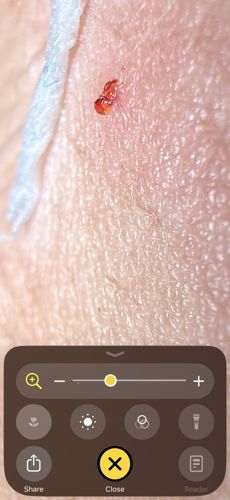
Community identification
Chigger (also known as Berry Bug or Harvest Mite larva)
Trombiculidae (Larval stage)
- Order & Family
- Order: Trombidiformes; Family: Trombiculidae
- Size
- 0.15 mm to 0.3 mm (nearly microscopic to the naked eye)
Natural Habitat
Tall grass, woodlands, low-lying damp areas, and brushy vegetation.
Diet & Feeding
Larvae feed on skin cells and liquefied tissue of host animals; adults feed on insect eggs and small arthropods in the soil.
Behavior Patterns
Larvae wait on vegetation for a host to pass by. They do not burrow into skin; instead, they inject digestive enzymes that break down skin cells to form a straw-like tube called a stylostome to feed. After several days, they drop off to transform into nymphs.
Risks & Benefits
Risks: Causes intense itching and red, pimple-like bumps. While they don't typically transmit diseases in North America, in some parts of Asia, they can transmit scrub typhus. Benefits: Adults help control other small pest populations in the ecosystem.