
Community identification
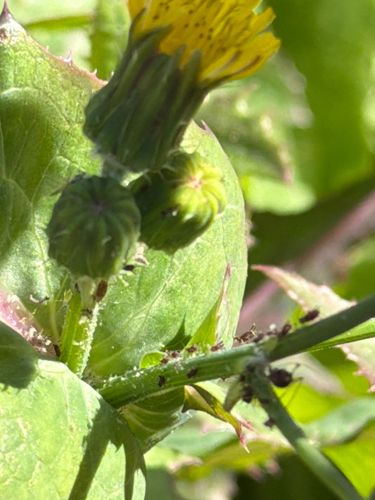
Aphid
Aphididae (family)
- Order & Family
- Order Hemiptera, Family Aphididae
- Size
- 1 to 10 mm (most are under 4 mm)
Natural Habitat
Found worldwide, primarily on the stems, underleaves, and flower buds of a wide variety of plants, including gardens, agricultural crops, and forests.
Diet & Feeding
Herbivorous; they use needle-like mouthparts to pierce plant tissues and suck out nutrient-rich phloem sap.
Behavior Patterns
Often found in dense colonies. They can reproduce asexually (parthenogenesis) during the summer, leading to rapid population growth. They frequently have a symbiotic relationship with ants, which protect them in exchange for honeydew.
Risks & Benefits
Risks: Major agricultural pests that cause stunted growth, leaf curling, and transmit plant viruses. Benefits: They serve as a vital food source for many beneficial insects like ladybugs, lacewings, and hoverflies.