
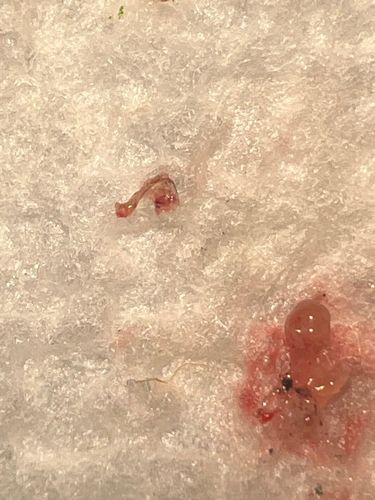
Community identification
Bloodworm (Midge Larvae)
Chironomus plumosus (representative species)
- Order & Family
- Order: Diptera; Family: Chironomidae
- Size
- Typically 0.5 to 1 inch (1.2 to 2.5 cm) in length.
Natural Habitat
Found in both freshwater and marine environments, often in the bottom sediment of lakes, ponds, and slow-moving streams.
Diet & Feeding
They primarily feed on organic detritus, algae, and microorganisms in the sediment.
Behavior Patterns
They live in silken tubes in the substrate. Their red color comes from hemoglobin, which allows them to survive in low-oxygen environments. They eventually pupate and emerge as non-biting midges.
Risks & Benefits
They are a vital food source for fish and waterfowl. While they do not bite humans, handling them can occasionally cause allergic reactions or skin irritation in sensitive individuals. They are also indicators of water quality.