
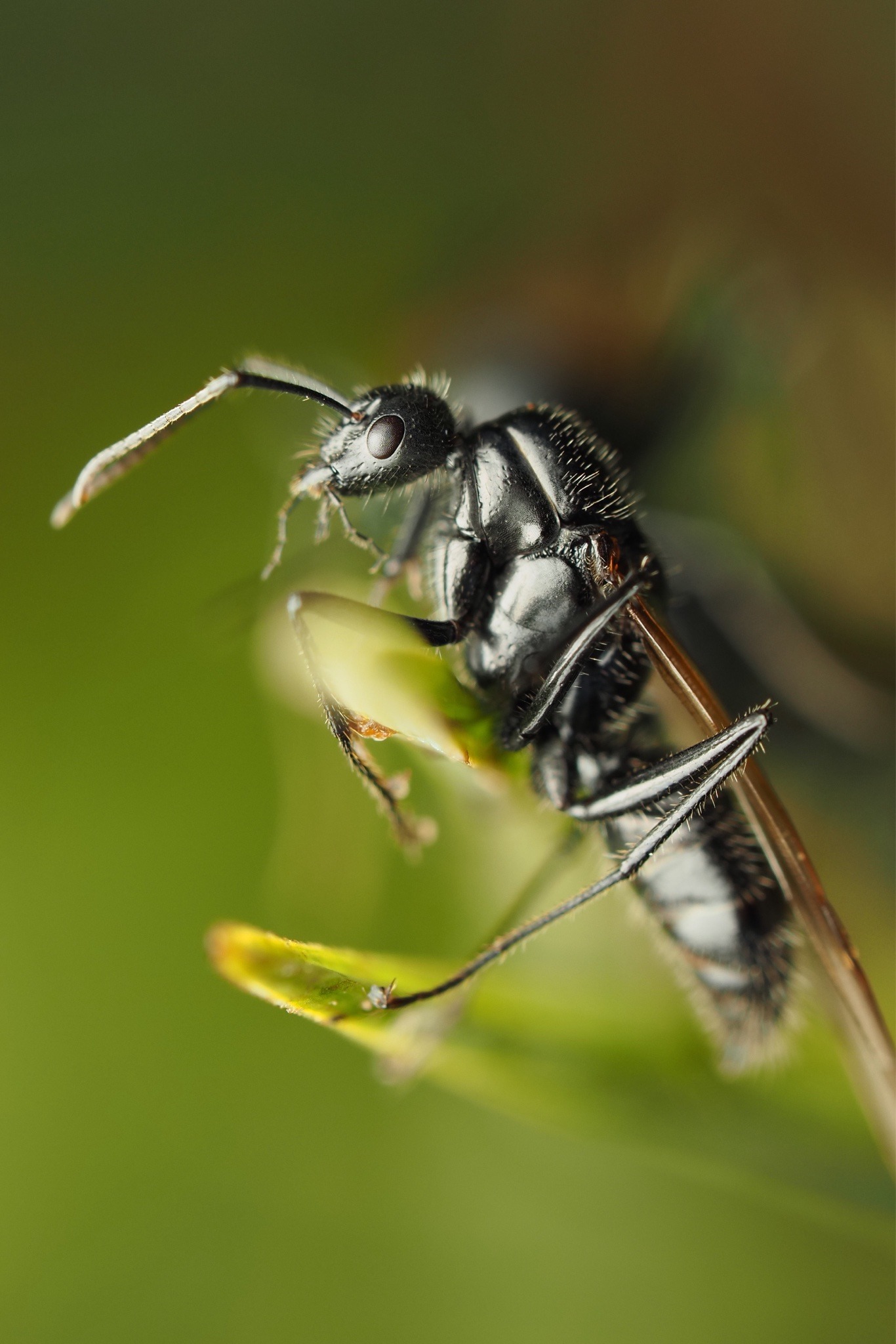
Community identification
Black Carpenter Ant (Winged Reproductive/Alate)
Camponotus pennsylvanicus
- Order & Family
- Order: Hymenoptera / Family: Formicidae
- Size
- Queens and winged reproductives range from 13 to 20 mm; workers range from 6 to 13 mm.
Natural Habitat
Found in woodlands and suburban areas, nesting in damp or decaying wood such as logs, stumps, or structural timbers.
Diet & Feeding
Omnivorous; they consume plant juices, honeydew from aphids, other insects, and sugary or protein-rich food waste.
Behavior Patterns
Social insects with a caste system. Winged alates emerge for nuptial flights in late spring. They do not eat wood but excavate galleries within it for nesting.
Risks & Benefits
Potential household pests that can cause structural damage to wood over time. Beneficially, they aid in decomposition of forest wood and act as a food source for wildlife.