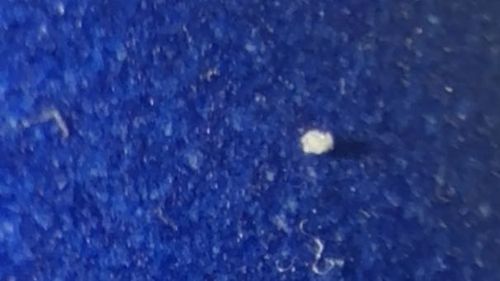
Mold Mite (Tentative Identification due to image quality)
Scientific Name: Tyrophagus putrescentiae
Order & Family: Sarcoptiformes; Acaridae
Size: Extremely small, typically 0.3 mm to 0.7 mm (often barely visible to the naked eye as moving dust).
Natural Habitat
Warm, high-humidity environments rich in mold or fungi, often found in pantries, aged cheeses, stored grains, or damp fabrics.
Diet & Feeding
Feeds primarily on fungal growth (mold), organic debris, yeast, and foods with high protein or fat content like grain, flour, and cheese.
Behavior Patterns
They are often seen as tiny, slow-moving white specks. They reproduce rapidly in humid conditions and can infest food products, congregating in large numbers where mold is present.
Risks & Benefits
Risks: Can contaminate stored food products and cause allergic reactions (dermatitis or respiratory issues) in sensitive individuals. Benefits: They are decomposers in nature, though generally considered pests in homes.
Identified on: 2/21/2026