
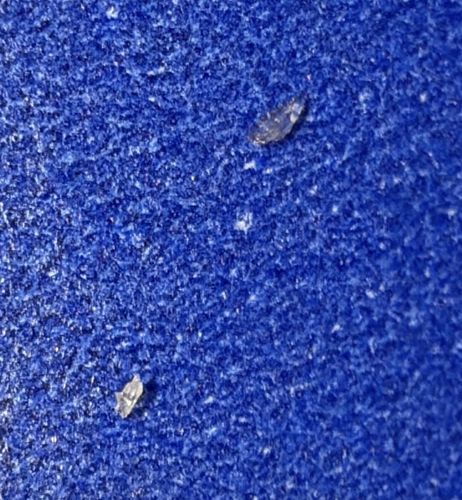
Community identification
Body Louse (or Head Louse) - Nymph/Egg Casing
Pediculus humanus humanus (or Pediculus humanus capitis)
- Order & Family
- Order: Phthiraptera, Family: Pediculidae
- Size
- 2.3 to 3.6 mm for adults; nymphs are smaller (about 1-2 mm), while these specific fragments appear to be very small, likely under 2mm.
Natural Habitat
Body lice live in clothing and bedding, moving to the skin to feed. Head lice live exclusively on the human scalp and hair shafts.
Diet & Feeding
Hematophagous (blood-sucking); they feed exclusively on human blood several times a day.
Behavior Patterns
They are obligate parasites. Body lice lay their eggs (nits) in the seams of clothing, while head lice attach them to hair shafts. They cannot jump or fly but crawl rapidly.
Risks & Benefits
Risks: Severe itching (pruritus), skin irritation, and potential secondary infections from scratching. Body lice are vectors for diseases like typhus, trench fever, and relapsing fever. Benefits: None known to humans.