
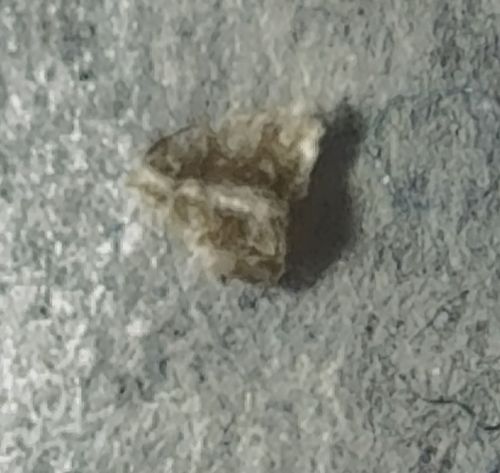
Debris-Carrying Lacewing Larva (often called Trash Bug or Junk Bug)
Chrysopidae (Family level, specifically larvae of certain genera like Ceraeochrysa)
- Order & Family
- Order: Neuroptera; Family: Chrysopidae
- Size
- Larvae grow to about 1/4 to 1/2 inch (6-12 mm) in length, excluding their debris packet.
Natural Habitat
Found on foliage of trees, shrubs, and weeds, as well as on flowers and in gardens where their prey (aphids) are abundant. Occasionally found indoors.
Diet & Feeding
Carnivorous predators. They feed primarily on aphids, but also eat mites, thrips, small caterpillars, insect eggs, and other soft-bodied insects. They are beneficial garden predators.
Behavior Patterns
The most distinctive behavior is camouflage. The larvae attach the drained bodies of their prey, lichen, moss, and other debris to hooked bristles on their backs to create a protective shield. This disguises them from predators like birds and larger insects.
Risks & Benefits
Benefits: distinct benefit to ecosystems and gardens as a voracious predator of pest insects like aphids. Risks: Generally harmless to humans, though the larvae have mandibles and can give a tiny pinch or nip if handled, which might cause minor irritation but is not dangerous.