
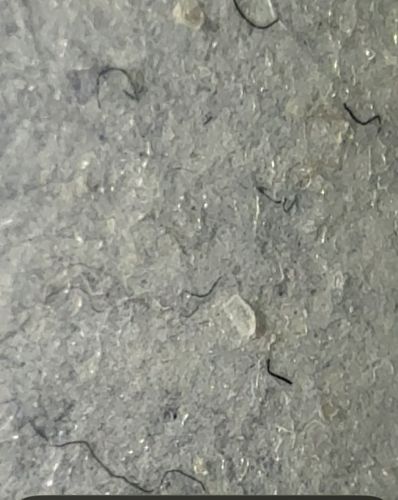
Drain Fly Larvae (often confused with Horsehair Worms or tiny millipedes in this context)
Psychodidae (family)
- Order & Family
- Diptera (Order), Psychodidae (Family)
- Size
- 3 to 10 mm in length
Natural Habitat
Typically found in moist, organic-rich environments such as drains, sewage systems, decaying vegetation, and bathroom shower grouting. In the context of the image, they often appear on wet concrete or tiles.
Diet & Feeding
Feeds on decaying organic matter, sludge, algae, bacteria, and fungi found in drains or stagnant water sources.
Behavior Patterns
The larvae are aquatic or semi-aquatic. They wiggle actively and are often seen near the drains they emerge from. They go through a complete metamorphosis: egg, larva, pupa, adult.
Risks & Benefits
Risks: Generally harmless to humans and do not bite, but can transmit bacteria from sewage to other surfaces. Large infestations can indicate plumbing leaks or serious hygiene issues. Benefits: In natural settings, they aid in decomposing organic matter.