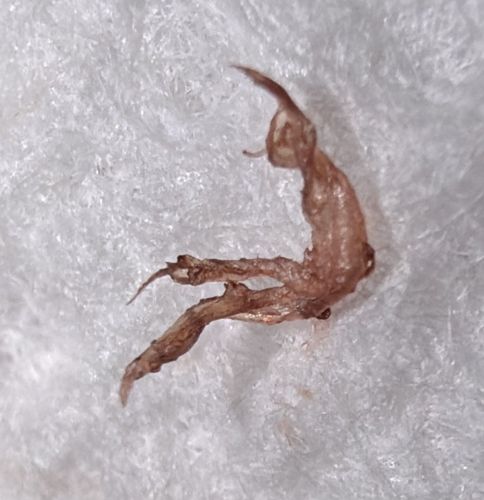
Louse (likely human head or body louse)
Scientific Name: Pediculus humanus
Order & Family: Order: Phthiraptera, Family: Pediculidae
Size: Adults are approximately 2-3 mm long (about the size of a sesame seed). The specimen in the image appears to be a dried carcass or shed exoskeleton, which can distort size.
Natural Habitat
Typically found on human hosts. Head lice (Pediculus humanus capitis) live on the scalp and hair; body lice (Pediculus humanus humanus) live in clothing and bedding, moving to the skin to feed.
Diet & Feeding
Parasitic blood feeders. They use piercing mouthparts to consume small amounts of human blood several times a day.
Behavior Patterns
Lice are obligate parasites, meaning they cannot survive long away from a host. They cling to hair or fabric fibers using specialized claw-like legs (visible in the image). They spread primarily through direct head-to-head or body contact.
Risks & Benefits
Risks: They cause intense itching (pruritus due to an allergic reaction to saliva) and skin irritation. Excessive scratching can lead to secondary bacterial infections. While head lice generally do not transmit disease, body lice are vectors for diseases like typhus, trench fever, and relapsing fever. Benefits: None; they are pests.
Identified on: 3/8/2026