
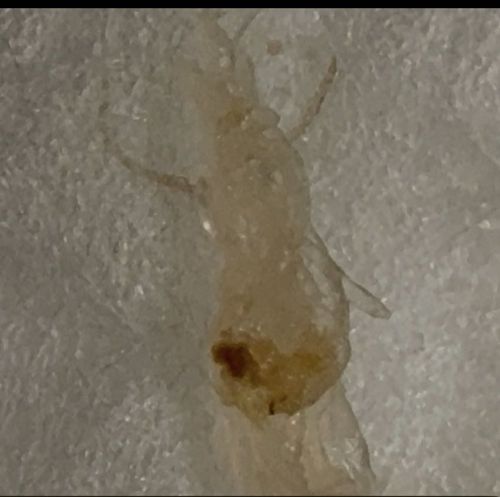
Booklouse (or Book Louse)
Liposcelis spp. (Common genus, often Liposcelis bostrychophila)
- Order & Family
- Order: Psocodea (formerly Psocoptera), Family: Liposcelididae
- Size
- Very small, typically 1 mm to 2 mm in length.
Natural Habitat
Found in high-humidity indoor environments, damp basements, windowsills, new construction (due to plaster drying), and amidst stored grains, old books, and cardboard boxes.
Diet & Feeding
They feed on microscopic molds, fungi, starch, glue (like bindings in old books), and stored food products like grains or cereals.
Behavior Patterns
They do not bite or fly (many indoor species are wingless). They are fast runners and often appear in large numbers when humidity levels are consistently high, which promotes fungal growth they feed on.
Risks & Benefits
Risks: Harmless to humans (they do not bite or transmit disease) but can be a nuisance pest and contaminate stored food or damage delicate paper/books. Benefits: They act as indicators of dampness and mold problems.