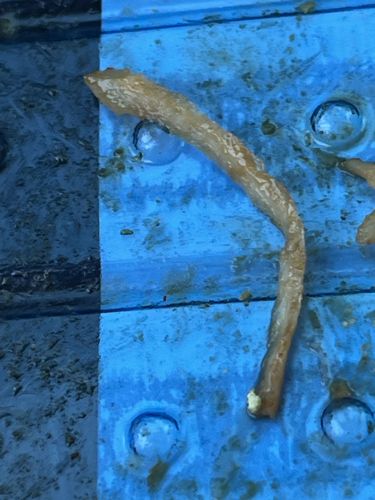
Lumbricus terrestris (Common Earthworm / Nightcrawler - likely a segment or mucus trail from an oligochaete)
Scientific Name: Lumbricus terrestris (Representative species)
Order & Family: Order: Opisthopora; Family: Lumbricidae
Size: Typically 10–25 cm (4–10 inches) in length for a full adult.
Natural Habitat
Moist soils rich in organic matter, compost piles, and leaf litter. Often seen on surfaces after heavy rain.
Diet & Feeding
Detritivore; consumes soil and decaying organic matter such as fallen leaves and roots.
Behavior Patterns
Nocturnal surface feeders. They are hermaphroditic and play a critical role in soil aeration and nutrient cycling through their tunneling activities.
Risks & Benefits
Extremely beneficial to ecosystems and gardens by improving soil structure and fertility. No risk to humans; however, they can be invasive in certain forest ecosystems where they consume protective leaf litter too quickly.
Identified on: 3/13/2026