
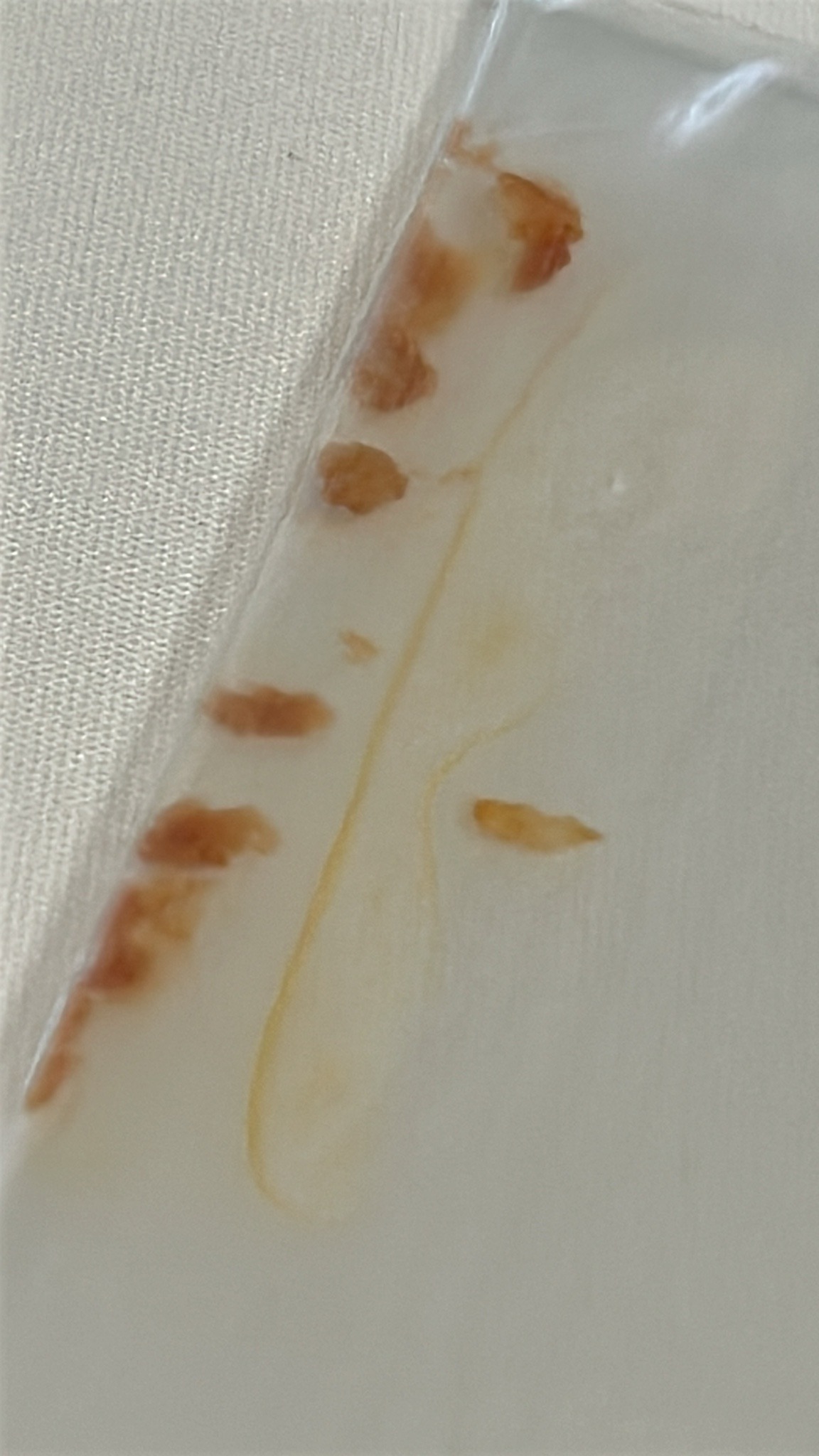
Community identification
Human Pinworm
Enterobius vermicularis
- Order & Family
- Order: Oxyurida, Family: Oxyuridae
- Size
- Females are 8-13 mm long; males are smaller, roughly 2-5 mm long.
Natural Habitat
The human large intestine (cecum, appendix, and ascending colon) and the perianal skin area.
Diet & Feeding
They feed on intestinal contents, mucosal cells, and bacteria within the human digestive tract.
Behavior Patterns
Adult females migrate out of the anus at night to deposit thousands of eggs on the perianal folds. The sticky coating of the eggs causes intense itching, and scratching often leads to the transfer of eggs to hands and surfaces (fecal-oral route).
Risks & Benefits
Causes enterobiasis, characterized by perianal itching and restless sleep. While relatively harmless compared to other parasites, they are highly contagious in communal settings like schools. There are no ecological benefits to humans.