
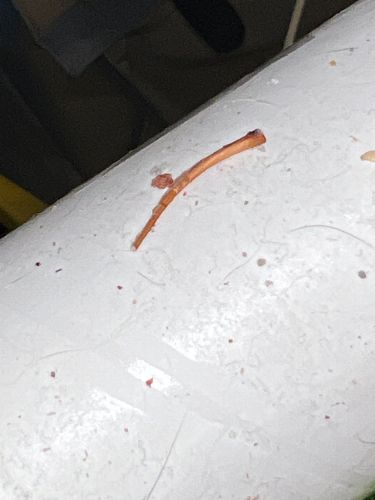
Community identification
Two-lined Walkingstick
Anisomorpha buprestoides
- Order & Family
- Phasmatodea: Pseudophasmatidae
- Size
- Females range from 65 to 80 mm; males are significantly smaller, ranging from 40 to 50 mm.
Natural Habitat
Found in forests, grasslands, and suburban gardens across the Southeastern United States, often hiding in leaf litter or under bark during the day.
Diet & Feeding
Herbivorous, primarily feeding on the leaves of oak trees, rosemary, and other shrubs.
Behavior Patterns
They are nocturnal and often found in mating pairs, with the smaller male riding on the back of the female. They use chemical defense by spraying a potent milky fluid from prothoracic glands.
Risks & Benefits
Poses a risk to humans and pets due to their ability to spray a defensive chemical that causes intense pain and temporary blindness if it hits the eyes. They are beneficial to the ecosystem as a food source for birds and as decomposers of plant matter.