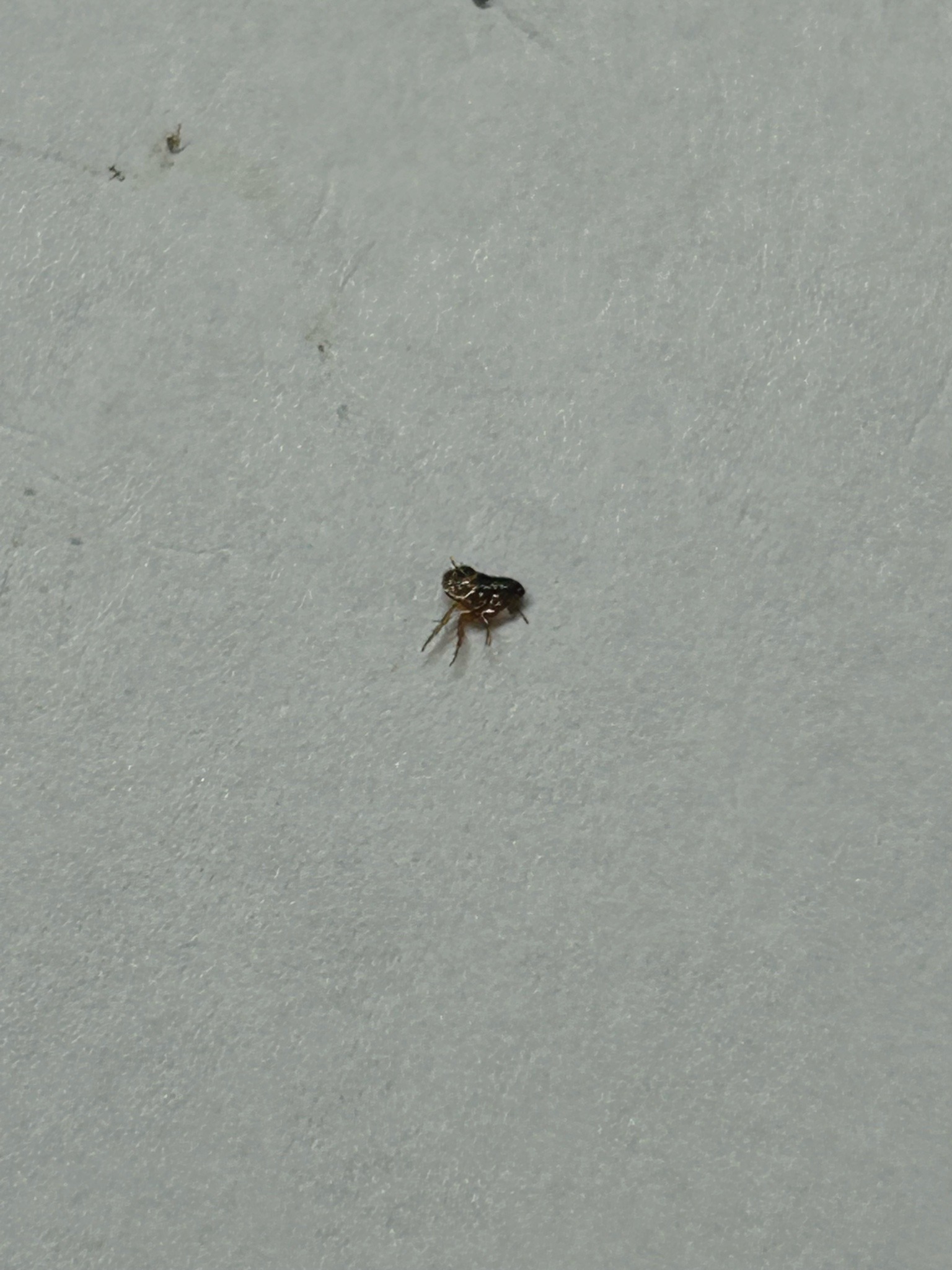
Cat Flea
Scientific Name: Ctenocephalides felis
Order & Family: Order: Siphonaptera; Family: Pulicidae
Size: 1.5 to 3.3 mm (roughly the size of a pinhead)
Natural Habitat
Commonly found on domestic cats, dogs, and in carpets or upholstery within homes.
Diet & Feeding
Obligate hematophages; adults feed exclusively on the blood of mammals (primarily cats and dogs, but will bite humans). Larvae feed on organic debris and 'flea dirt' (dried blood excreted by adults).
Behavior Patterns
Wingless but capable of jumping long distances. They undergo complete metamorphosis (egg, larva, pupa, adult) and spend most of their adult life on a host. They can remain in the pupal stage for several months until they sense vibrations or heat from a host.
Risks & Benefits
Adults cause irritation and allergic dermatitis in pets and humans. They can transmit tapeworms (Dipylidium caninum) if ingested and may carry bacteria like Bartonella henselae (cat-scratch disease). They offer no ecological benefits to humans.
Identified on: 6/14/2026