
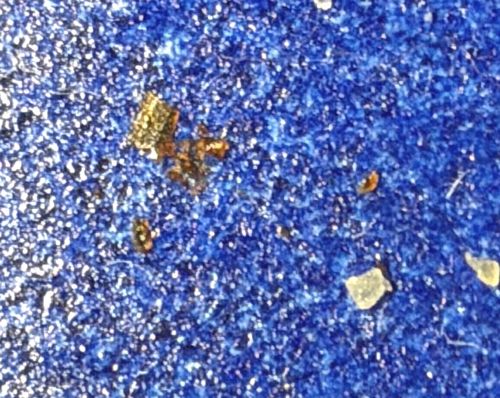
Bed Bug (remains/debris)
Cimex lectularius
- Order & Family
- Hemiptera: Cimicidae
- Size
- Adults are approximately 4-5 mm (about 3/16 inch) long; nymphs range from 1 mm to 4 mm. The specimen in the photo appears to be fragmented debris, making size estimate difficult without a reference scale.
Natural Habitat
Typically found in human dwellings, particularly in cracks and crevices near sleeping areas such as mattresses, box springs, bed frames, and headboards. They prefer tight, dark spaces.
Diet & Feeding
Hematophagous (blood-feeders). They feed almost exclusively on the blood of humans, though they can feed on other warm-blooded animals if humans are unavailable.
Behavior Patterns
Nocturnal and elusive. They hide during the day and emerge at night to feed on sleeping hosts. They are known for hitchhiking on luggage and clothing to infest new locations. They leave behind tell-tale signs like rusty spots (fecal matter) or shed skins.
Risks & Benefits
Risks: Bed bugs cause itchy bites that can lead to secondary skin infections, anxiety, and insomnia. They are not known to transmit disease but are a significant nuisance and difficult to eradicate. Benefits: None known for humans or household ecosystems.