
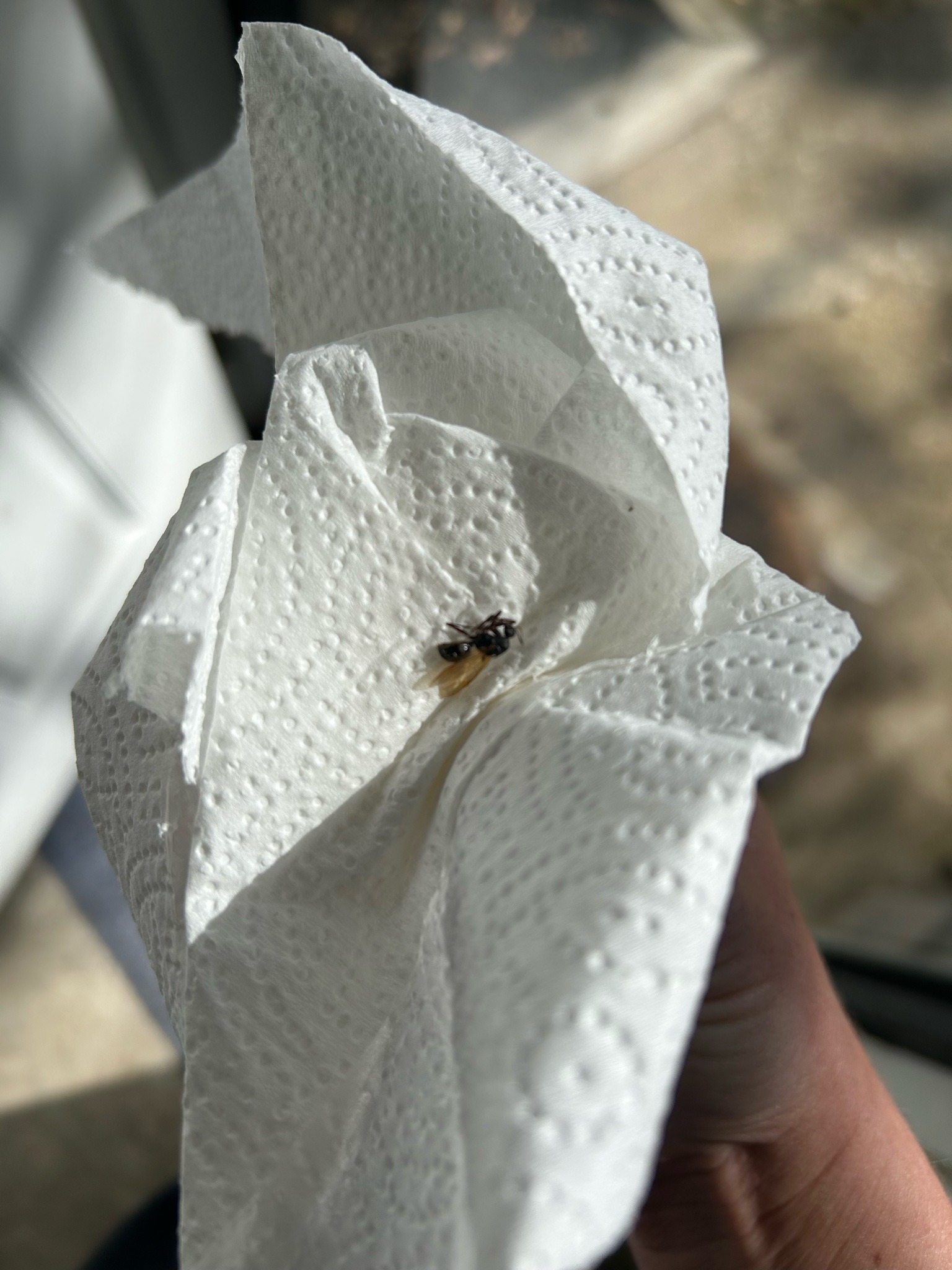
Community identification
Carpenter Ant Reproductives (Swarmers)
Camponotus spp.
- Order & Family
- Order: Hymenoptera, Family: Formicidae
- Size
- Winged reproductives (alates) are usually larger than workers, ranging from 12 mm to 18 mm (approx. 0.5 to 0.75 inches).
Natural Habitat
Typically found in forests or residential areas; they nest in moist, decaying wood such as hollow trees, stumps, logs, and structural timbers in homes.
Diet & Feeding
They do not eat wood but instead feed on protein and sugar sources, including honeydew from aphids, nectar, and other insects.
Behavior Patterns
The presence of winged individuals indicates a mature colony nearby that is produces 'swarmers' for mating and establishing new colonies, usually during spring and early summer.
Risks & Benefits
While they do not sting like bees, they can bite with large mandibles. They are significant structural pests as they excavate wood to build nests, but they benefit the ecosystem by breaking down decaying wood into soil.