
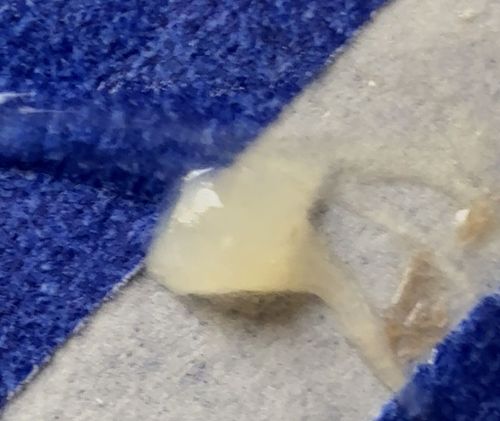
Dog Vomit Slime Mold (Not a bug/insect)
Fuligo septica
- Order & Family
- Order: Physarales, Family: Physaraceae
- Size
- Can range significantly from a few centimeters to over 20 centimeters (8 inches) in diameter and 3 centimeters thick.
Natural Habitat
Found worldwide in moist environments; typically appears on decaying wood, bark mulch, forest floors, gardens, and sometimes on inorganic surfaces (like the mat in the image) if nearby organic matter is present.
Diet & Feeding
It is a saprophyte, feeding on decaying organic matter, wood, bacteria, yeast, and fungal spores through phagocytosis.
Behavior Patterns
Unlike fungi, this is a distinct organism (a mycetozoan). During its plasmodial phase, it moves like a giant amoeba, pulsing slowly to find food sources before eventually hardening into a spore-bearing structure (aethalium). It often appears suddenly after rain.
Risks & Benefits
Benefits: Essential for ecosystem decomposition and nutrient cycling. Risks: Generally harmless to humans and pets, though it can cause allergic reactions (asthma/rhinitis) in sensitive individuals if spores are inhaled. It is purely cosmetic 'damage' in gardens and does not harm living plants.