
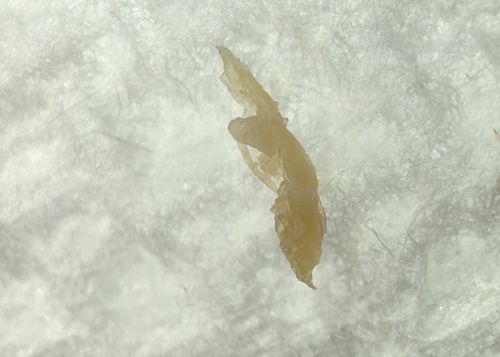
Community identification
Body Louse (or possibly Head Louse)
Pediculus humanus humanus (or Pediculus humanus capitis)
- Order & Family
- Order: Phthiraptera (Lice), Family: Pediculidae
- Size
- Adults are 2.3–3.6 mm long; Nymphs are smaller (1-2 mm).
Natural Habitat
Exclusively on human hosts; Body lice live in clothing and bedding and move to the skin to feed, while head lice live exclusively on the scalp and hair.
Diet & Feeding
Hematophagous (blood-sucking); they feed frequently on human blood.
Behavior Patterns
They are ectoparasites that cling to fibers (clothing) or hairs using specialized claw-like legs. They cannot fly or jump. The female lays eggs (nits) glued to hair shafts or clothing fibers.
Risks & Benefits
Risks: Can cause intense itching (pruritus), skin irritation, and secondary bacterial infections from scratching. Body lice specifically are vectors for diseases like typhus, trench fever, and relapsing fever. Benefits: None known.