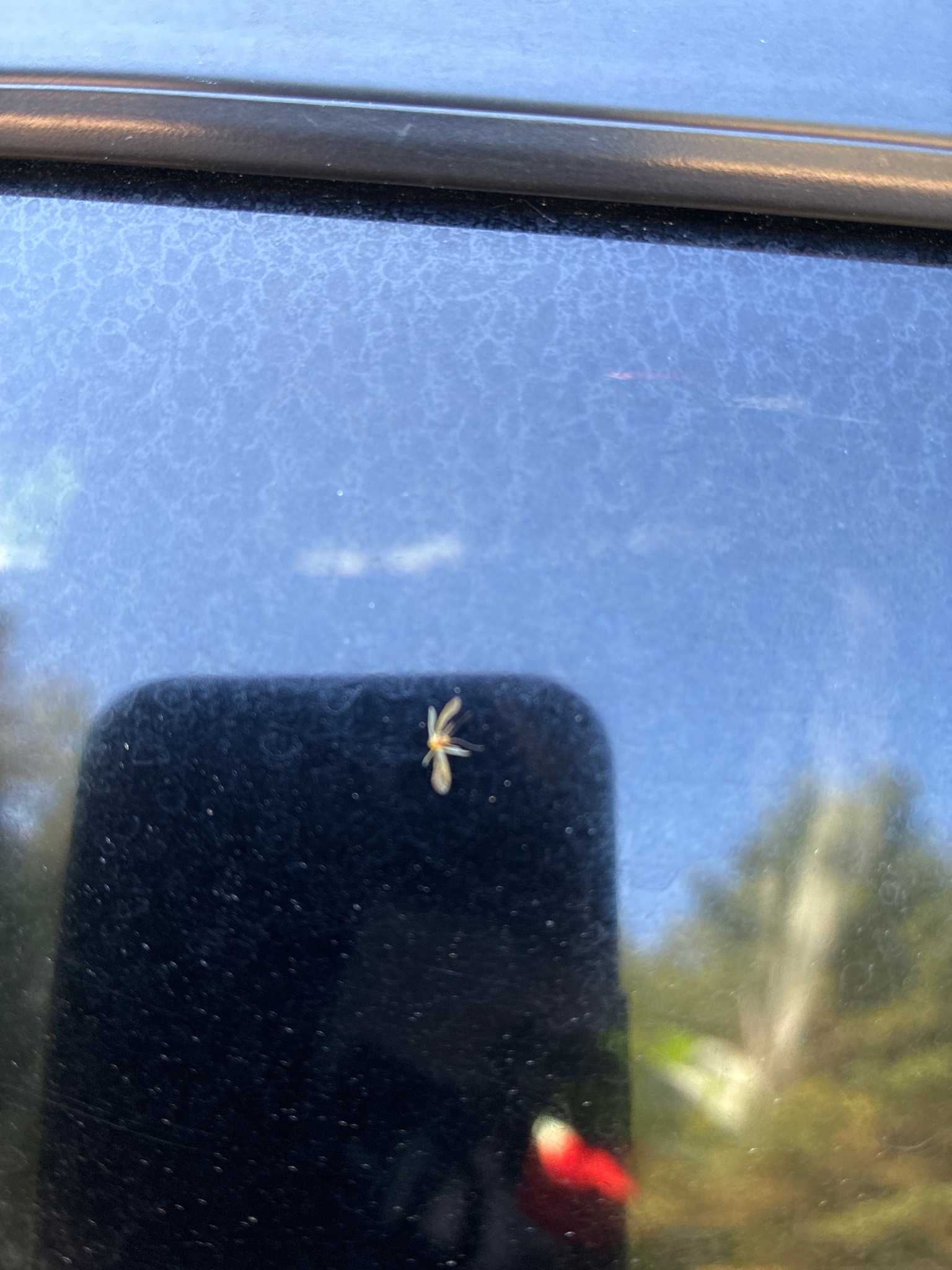
Non-biting Midge
Scientific Name: Chironomus spp.
Order & Family: Order: Diptera; Family: Chironomidae
Size: 1 to 10 millimeters in length
Natural Habitat
Found globally near freshwater sources like lakes, ponds, and streams; adults are often attracted to artificial lights and reflective surfaces like windows.
Diet & Feeding
Adults usually do not feed at all or consume only nectar and honeydew; larvae (known as bloodworms) feed on organic debris and algae in water.
Behavior Patterns
Adults form large mating swarms in the evening. They have a short lifespan of only a few days focused on reproduction. They are frequently confused with mosquitoes but do not have a biting proboscis.
Risks & Benefits
Benefits: Larvae are a vital food source for fish and birds and help cycle nutrients in water bodies. Risks: While they do not bite or transmit disease, large swarms can be a nuisance and may occasionally cause respiratory allergies in sensitive individuals.
Identified on: 6/29/2026