
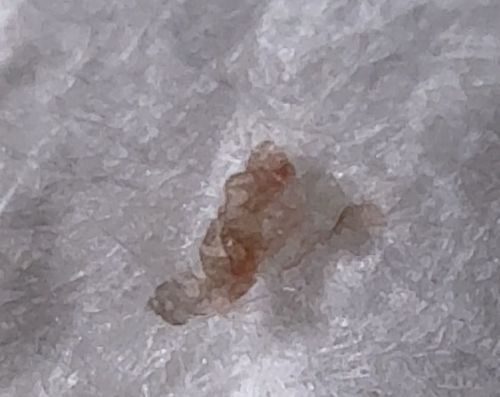
Bed Bug (Crushed and dried remains usually)
Cimex lectularius
- Order & Family
- Order: Hemiptera, Family: Cimicidae
- Size
- Adults are 4–5 mm long (about the size of an apple seed); nymphs range from 1 mm to 4 mm. The specimen in the image appears small and indefinite, possibly a crushed remain.
Natural Habitat
Bed bugs are exclusively indoor pests, living in cracks and crevices near human sleeping areas. They are found in mattress seams, box springs, headboards, behind wallpaper, and in furniture upholstery.
Diet & Feeding
Hematophagous (feed exclusively on blood), primarily human blood, though they will feed on other warm-blooded animals if humans are unavailable.
Behavior Patterns
They are nocturnal and cryptic, hiding during the day and emerging at night to feed. They are drawn to warmth and carbon dioxide. They do not fly or jump but crawl quickly. The image likely depicts a crushed specimen, which often leaves a reddish-brown smear due to the digested blood inside.
Risks & Benefits
Risks: Bed bugs cause itchy, red welts on skin, allergic reactions, anxiety, and insomnia. They are not known to transmit diseases but are a significant nuisance and difficult to eradicate. Benefits: None known to humans or the domestic ecosystem.