
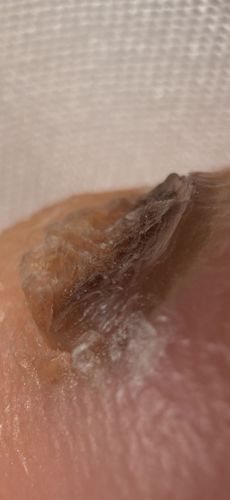
Tungiasis (Jigger Flea, Chigoe Flea, Sand Flea infestation)
Tunga penetrans
- Order & Family
- Order: Siphonaptera, Family: Tungidae
- Size
- 1 mm (unfed) to upwards of 1 cm (engorged female)
Natural Habitat
Found in warm, dry soil and sand in tropical and subtropical climates (beaches, stables, stock farms). Typically found in Central/South America, the Caribbean, and sub-Saharan Africa.
Diet & Feeding
Adults feed on the blood of mammals (mostly humans, dogs, pigs, and cattle). The females burrow into the skin to feed permanently while producing eggs.
Behavior Patterns
Unlike other fleas, the female Tunga penetrans burrows head-first into the host's skin (usually the feet/toes). Once embedded, she swells significantly as she produces eggs, creating a distinct white nodule with a central black dot (the posterior end for breathing and excretion). The entire life cycle usually completes within 4-6 weeks.
Risks & Benefits
Risks: Causes tungiasis, an intense inflammatory skin disease characterized by severe itching, pain, and lesions. Secondary bacterial infections (staph, strep, tetanus) are common and can lead to gangrene or amputation in severe, untreated cases. No ecological benefits to humans.