
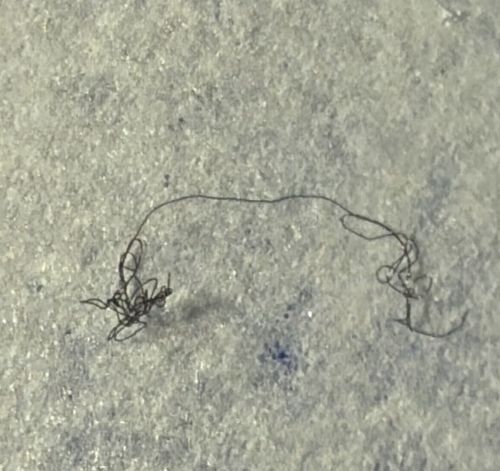
Horsehair Worm (also known as Gordian Worm)
Gordius types (Phylum Nematomorpha)
- Order & Family
- Order Gordioidea, Class Gordioida
- Size
- Typically 10 to 100 cm (4 to 40 inches) in length, but extremely thin (1 to 3 mm in diameter).
Natural Habitat
Adults live in freshwater environments like puddles, troughs, swimming pools, streams, and wet soil. The larvae are parasitic inside insects like crickets, grasshoppers, and cockroaches.
Diet & Feeding
Adults do not feed; they rely on stored energy. The larvae are parasitic, absorbing nutrients from the body fluids of their insect hosts (grasshoppers, beetles, crickets, etc.).
Behavior Patterns
They are famous for tangling themselves into 'Gordian knots' when mating in groups. They alter their host's behavior, compelling terrestrial insects to seek water and drown, allowing the adult worm to emerge into its aquatic breeding ground.
Risks & Benefits
They are harmless to humans, pets, and plants. Humans cannot be infected. They are generally considered beneficial or neutral as they act as a biological control for pest insect populations like crickets and cockroaches.