
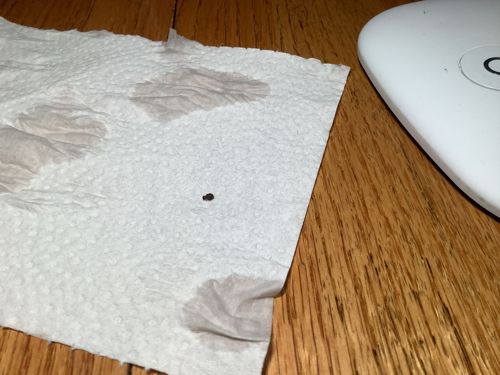
Carpet Beetle (likely Black Carpet Beetle based on appearance)
Attagenus unicolor (for Black Carpet Beetle) or other species within Dermestidae, difficult to confirm exact species from image.
- Order & Family
- Order: Coleoptera, Family: Dermestidae
- Size
- Larvae typically 2-5 mm, covered in bristles. Adults are small, oval-shaped beetles, usually 2-5 mm in length.
Natural Habitat
Indoors, they are commonly found in homes, museums, warehouses, and any place where suitable food sources like natural fibers or dried animal products are present. Outdoors, adults can be found on flowering plants.
Diet & Feeding
Larvae feed on a wide range of animal products and natural fibers including wool, fur, silk, leather, feathers, pet hair, dried meat, dried insects, and even cereals. Adults primarily feed on pollen and nectar from outdoor plants.
Behavior Patterns
Carpet beetle larvae often seek out dark, undisturbed areas, such as under furniture, in closets, or within wall voids. They are slow-moving and prefer to stay hidden. Adult carpet beetles are attracted to light and often found near windows; they can fly.
Risks & Benefits
Risks: Primarily a pest, causing damage to textiles, clothing, carpets, historical artifacts, stored food products, and taxidermy. They do not bite humans or transmit diseases. Benefits: As scavengers, they naturally help break down organic matter in ecosystems, though this is overshadowed by their pest status indoors.