Louse Nit (Empty Egg Casing) or Skin Debris
Scientific Name: Pediculus humanus capitis (if head louse egg case)
Order & Family: Order: Psocodea (formerly Phthiraptera), Family: Pediculidae
Size: Approximately 0.8 mm by 0.3 mm (oval shaped)
Natural Habitat
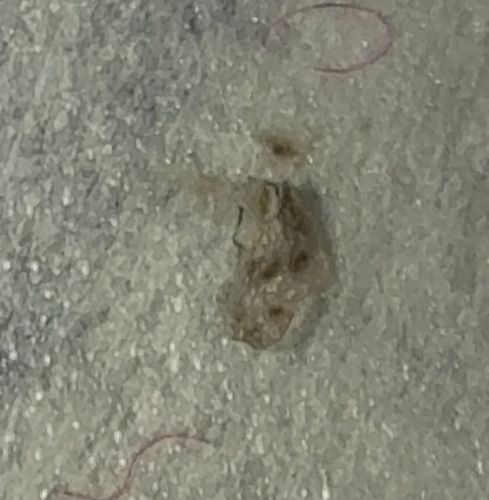
Typically found on the human scalp, attached near the base of hair shafts. However, the debris pictured is dislodged and on a fabric surface.
Diet & Feeding
Nits themselves are eggs and do not eat. Adult lice feed on human blood. Skin debris is inert.
Behavior Patterns
Nits are cemented firmly to hair shafts by the female louse. Once hatched, the empty casing (which this likely represents if biological) remains attached but appears white or translucent. This object appears to be a dislodged, possibly crushed, casing or simply a piece of dried sebum/dandruff.
Risks & Benefits
Risks: If it is a viable nit, it indicates an active lice infestation which causes itching and potential secondary infection from scratching. Benefits: None.
Identified on: 3/5/2026