
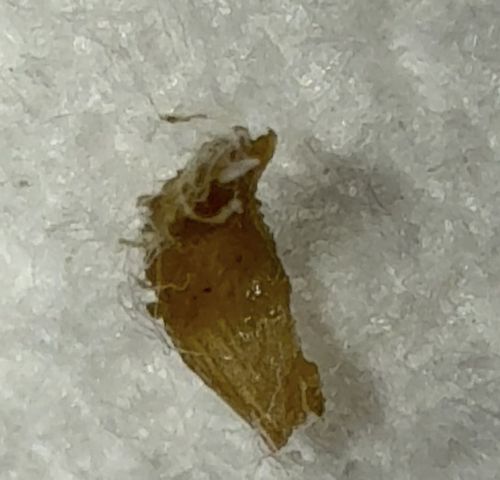
Household Casebearing Moth (larva case)
Phereoeca uterella
- Order & Family
- Order: Lepidoptera, Family: Tineidae
- Size
- Case is typically 8-13 mm (0.3-0.5 inches) long.
Natural Habitat
Commonly found indoors in humid conditions, especially on walls, in corners, underneath furniture, and inside closets. They thrive in warm climates like Florida.
Diet & Feeding
The larvae feed on old spider webs, wool, hair, lint, and other organic debris. They may occasionally eat dead insects.
Behavior Patterns
The larva builds a flattened, pumpkin-seed-shaped case out of silk and debris (sand, hair, lint) which it carries around for protection. It drags the case along as it moves and can turn around inside the case to feed from either end.
Risks & Benefits
Risks: Generally harmless to humans and pets; they do not sting or bite. However, they can be a minor nuisance pest in homes and may cause slight damage to woolens or fabrics if infestations are large. Benefits: They clean up small amounts of organic detritus like cobwebs.