
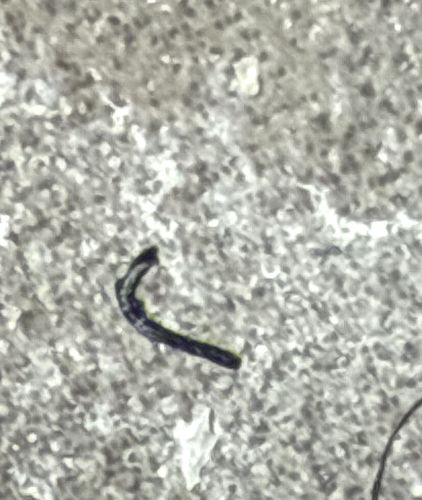
Drain Fly Larva (sometimes mistaken for a tiny millipede or moth larva)
Psychodidae (Family) - specifically the larval stage
- Order & Family
- Diptera (Order), Psychodidae (Family)
- Size
- Typically 3 mm to 10 mm (0.12 to 0.4 inches) in length.
Natural Habitat
Found in moist, organic-rich environments such as sink drains, shower drains, sewage pipes, beneath leaking fixtures, and occasionally in damp carpets or soil near plumbing leaks.
Diet & Feeding
Feeds on decaying organic matter, gelatinous slime (biofilm) that accumulates in drains, microscopic plants, and algae.
Behavior Patterns
The larvae are semi-aquatic but can survive on damp surfaces. They are legless but move using a distinct wriggling motion. They often appear black or dark grey with a whitish underside and darker bands on their dorsal side. They eventually pupate into small, fuzzy, moth-like flies.
Risks & Benefits
They do not bite humans or pets, but they can be a nuisance pest. Their presence in large numbers usually indicates a plumbing issue or a buildup of organic sludge. While generally harmless, they can mechanically transmit bacteria from the filthy drains they inhabit to clean surfaces.