
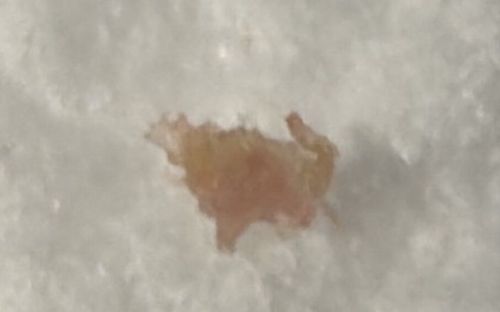
Chigger (Harvest Mite Larva)
Trombicula alfreddugesi (common species in North America)
- Order & Family
- Order: Trombidiformes; Family: Trombiculidae
- Size
- Extremely small, approximately 0.15 to 0.3 mm (often barely visible to the naked eye as a tiny red speck).
Natural Habitat
Found in grassy fields, forests, parks, and gardens, particularly in areas with tall grass, weeds, and berry patches. They thrive in humid, shaded environments.
Diet & Feeding
Larvae (the parasitic stage) feed on dissolved skin cells of animals, including humans. Adults feed on small insects, insect eggs, and plant matter.
Behavior Patterns
The larval stage attaches to a host (human or animal) to feed. Contrary to myth, they do not burrow under the skin; instead, they inject enzymes to liquefy skin cells, forming a feeding tube called a stylostome. After feeding for a few days, they drop off to molt into nymphs.
Risks & Benefits
Risks: Bites cause intense itching, red welts, and skin irritation that can last for weeks. In some parts of Asia and the Pacific, they can transmit scrub typhus. Benefits: Adults play a minor role in soil ecology as predators of small arthropods.