
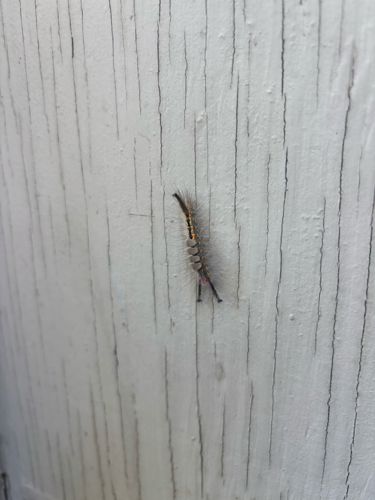
Community identification
White-marked Tussock Moth Caterpillar
Orgyia leucostigma
- Order & Family
- Lepidoptera: Erebidae
- Size
- 30 to 35 mm (approx. 1.2 to 1.4 inches) when fully grown.
Natural Habitat
Deciduous and coniferous forests, orchards, and urban gardens across Eastern and Central North America.
Diet & Feeding
Generalist feeder; consumes leaves from over 140 species of trees and shrubs, including oak, maple, birch, apple, and various evergreens.
Behavior Patterns
Active during the day; the larvae are known for their distinct appearance with four white tufts of hair and two long black pencil hairs at the front. They undergo three or more generations per year in warmer climates and overwinter as eggs.
Risks & Benefits
Risk: The hairs (setae) can cause skin irritation or allergic reactions (urticaria) in humans if touched. Benefit: They serve as a food source for birds and spiders, though their population can occasionally reach pest status and defoliate trees.