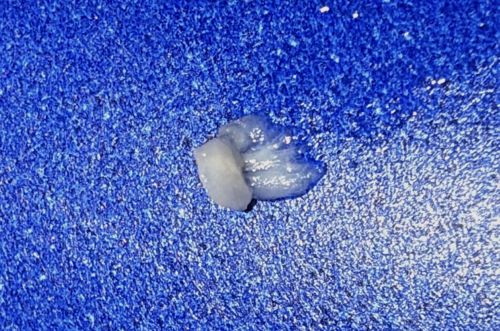
Tapeworm Segment (Proglottid)
Scientific Name: Dipylidium caninum (most common); alternately Taenia species
Order & Family: Order: Cyclophyllidea; Family: Dipylidiidae (for D. caninum)
Size: Segments are roughly the size of a grain of rice (about 1–2 mm wide, 10–12 mm long), but can contract to look like shorter, rounder blobs or cucumber seeds.
Natural Habitat
Intestines of host animals (dogs, cats, occasionally humans). The segments are typically found in feces, on bedding, or around the perianal area of the host.
Diet & Feeding
The adult tapeworm absorbs nutrients directly through its skin (tegument) from the host's digestive contents; segments do not feed independently.
Behavior Patterns
Adult worms live in the small intestine. They shed collecting segments called proglottids filled with eggs. These segments are motile (can move) when fresh and often crawl out of the host's anus to spread eggs into the environment.
Risks & Benefits
Risks: Parasitic infection causing weight loss, scooting/itching rear end, and potential mild gastrointestinal distress in pets. Can occasionally infect humans (zoonotic), particularly children who might accidentally ingest an infected flea (the intermediate host). Benefits: None.
Identified on: 3/2/2026