
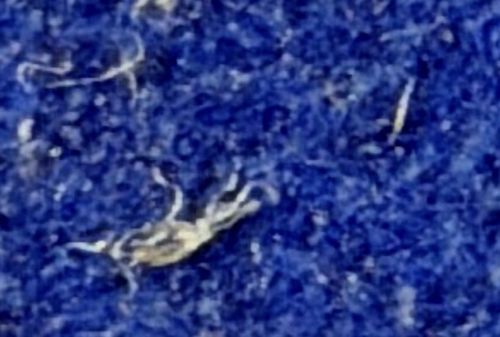
Dust Mite
Dermatophagoides pteronyssinus (or Dermatophagoides farinae)
- Order & Family
- Order: Sarcoptiformes, Family: Pyroglyphidae
- Size
- Microscopic, typically 0.2 to 0.3 millimeters in length
Natural Habitat
Indoor environments, specifically thriving in mattresses, bedding, upholstered furniture, and carpets where skin scales accumulate and humidity is moderate to high.
Diet & Feeding
Mainly organic detritus such as flakes of shed human skin, animal dander, and fungal spores.
Behavior Patterns
They do not bite or sting. They are scavengers that move through fibers seeking food sources and moisture. Their lifecycle from egg to adult takes about a month.
Risks & Benefits
Risks: Highly allergenic; their feces and decaying body parts contain proteins that are a common cause of asthma and allergic reactions (dust allergy) in humans. Benefits: They act as decomposers of organic waste (dead skin cells) on a micro scale, though this benefit is generally outweighed by the allergic risks in homes.