
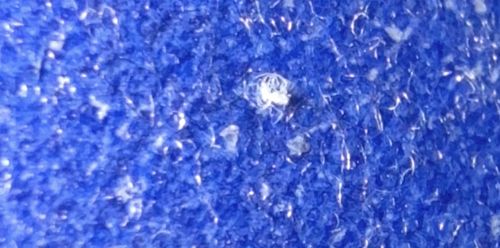
Dust Mite
Dermatophagoides spp. (e.g., Dermatophagoides farinae or Dermatophagoides pteronyssinus)
- Order & Family
- Order: Sarcoptiformes, Family: Pyroglyphidae
- Size
- Microscopic; typically 0.2 to 0.3 millimeters in length. Generally translucent and invisible to the naked eye against light backgrounds, though visible as specks under magnification or on contrasting surfaces.
Natural Habitat
Found worldwide in human habitations, specifically thriving in warm, humid environments within mattresses, pillows, carpets, upholstered furniture, and clothing.
Diet & Feeding
Feeds primarily on dead skin scales (dander) shed by humans and pets, as well as fungal spores and pollen found in dust.
Behavior Patterns
They do not bite or sting. They tend to congregate in high-humidity areas where their food source accumulates. Their life cycle from egg to adult takes about a month.
Risks & Benefits
Risks: A major cause of allergic reactions (sneezing, runny nose, itchy eyes) and asthma attacks due to proteins found in their feces and body fragments. Benefits: They act as scavengers cleaning up organic waste (skin cells), though this 'benefit' is usually outweighed by the allergenic risk in homes.