
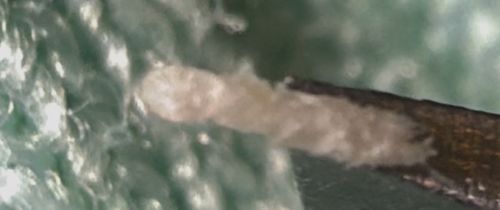
Webbing Clothes Moth Larva (or Case-bearing Clothes Moth Larva casing)
Tineola bisselliella (Webbing) or Tinea pellionella (Case-bearing)
- Order & Family
- Lepidoptera order, Tineidae family
- Size
- Larvae are typically 10-12 mm long when fully grown; the image shows a magnified view often seen as a small, irregular lint-like tube.
Natural Habitat
Dark, undisturbed areas in homes, especially inside closets, drawers, and attics where natural fibers like wool, silk, fur, or felt are stored.
Diet & Feeding
Strictly keratophagous; larvae feed on keratin found in animal hair, wool, cashmere, fur, feathers, and lint containing human hair or pet dander.
Behavior Patterns
Larvae spin silken tubes or tunnels to protect themselves while feeding (webbing moths) or carry a portable case made of silk and fiber debris (case-bearing moths). They avoid light and are rarely seen unless an infestation is disturbed.
Risks & Benefits
They pose no direct health risk to humans (do not bite or spread disease) but are a significant pest, causing extensive and costly damage to clothes, carpets, rugs, and upholstery made from natural fibers.