Booklouse (or Psocid)
Scientific Name: Liposcelis spp. (Commonly)
Order & Family: Order: Psocodea (formerly Psocoptera), Family: Liposcelididae
Size: Very small, typically 1 to 2 mm in length.
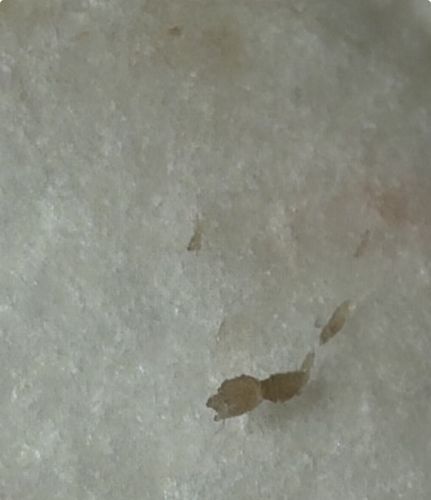
Natural Habitat
Typically found in damp, humid environments indoors such as basements, bathrooms, or kitchens. They are often discovered in stored food products (flour, grains, sugar), books, cardboard boxes, and behind wallpaper.
Diet & Feeding
They feed on microscopic mold and fungi that grow in humid conditions. They will also eat starchy materials like book glue, paper, grains, and stored dry goods.
Behavior Patterns
Booklice are flightless and move primarily by running quickly in short spurts. They do not bite. They thrive in high humidity and are often an indicator of moisture problems or mold growth.
Risks & Benefits
Risks: They are a nuisance pest that can contaminate stored food products and damage books or paper goods. Benefits: They do not bite humans or pets, do not tough structural wood, and do not transmit diseases.
Identified on: 3/2/2026