
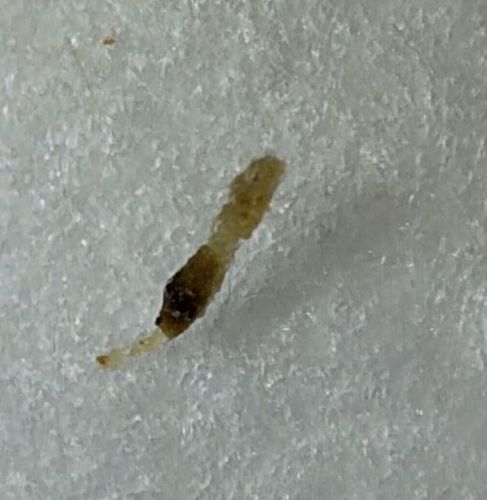
Household Casebearer or Plaster Bagworm
Phereoeca uterella (or sometimes Phereoeca allutella)
- Order & Family
- Order: Lepidoptera, Family: Tineidae
- Size
- Larval case is usually 8-13 mm (approx. 0.3-0.5 inches) long.
Natural Habitat
Typically found indoors in humid conditions, often on walls, under spiderwebs, in closets, or garages. They thrive in climates similar to Florida and Southeast Asia.
Diet & Feeding
Detritivores that feed on spiderwebs, old silk, wool, human hair, pet fur, and dead insect parts. They rarely eat cotton.
Behavior Patterns
The larva constructs a protective case out of silk and debris (sand, soil, insect parts) which it carries around. It drags this case as it moves, retreating inside when disturbed. It is often seen climbing walls.
Risks & Benefits
Generally considered a harmless household nuisance rather than a serious pest. They do not bite or sting humans. While they can eat wool, their primary diet of spiderwebs and dust means they rarely cause significant damage to clothing unless in large infestations.