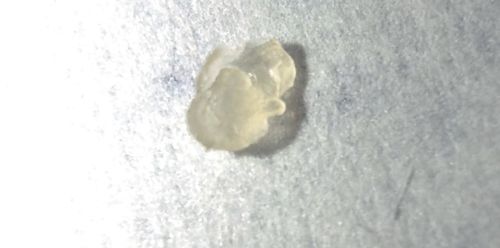
Tapeworm Segment (Proglottid)
Scientific Name: Dipylidium caninum (typically)
Order & Family: Order: Cyclophyllidea, Family: Dipylidiidae
Size: Segments are typically 3-12 mm long (resembling a cucumber seed or grain of rice)
Natural Habitat
Intestinal tracts of hosts (dogs, cats, humans); excreted in feces or found on bedding/fur
Diet & Feeding
Absorbs nutrients directly from the host's digestive tract contents
Behavior Patterns
These segments detach from the adult worm and are passed in feces. They are mobile when fresh, expanding and contracting, and eventually dry out to look like sesame seeds or golden grains of rice. They release egg packets into the environment to be eaten by flea larvae.
Risks & Benefits
Parasitic risk to pets and occasionally humans (zoonotic). While generally not life-threatening, they cause discomfort, anal itching (scooting), and potential weight loss in severe cases. They indicate a flea infestation issue, as fleas are the intermediate vector.
Identified on: 2/26/2026