
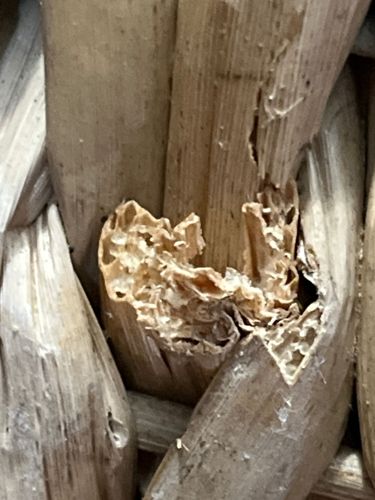
Drywood Termite (damage)
Kalotermitidae (Family)
- Order & Family
- Order Isoptera, Family Kalotermitidae
- Size
- Workers and soldiers typically 0.25 to 1 inch (6-25 mm); reproductives (alates) slightly larger, up to 1 inch (25 mm) including wings.
Natural Habitat
Dry, undecayed wood, including structural timbers, furniture, and other wooden articles. They do not require contact with soil.
Diet & Feeding
Cellulose, which they obtain by eating wood. They excavate irregular galleries within the wood.
Behavior Patterns
Unlike subterranean termites, drywood termites live entirely within the wood they infest. They create colonies that are typically smaller than subterranean termite colonies. They produce characteristic fecal pellets (frass) which are hard, hexagonal, and similar in color to the wood they are consuming, often pushed out of kick-out holes. Swarming events, where winged reproductives emerge, usually occur during warmer months.
Risks & Benefits
Potential risks: Significant structural damage to homes, furniture, and other wooden structures due to their wood-eating habits. Infestations can go unnoticed for long periods as they live entirely within the wood. No direct benefits to humans, although they play a role in wood decomposition in natural environments.