
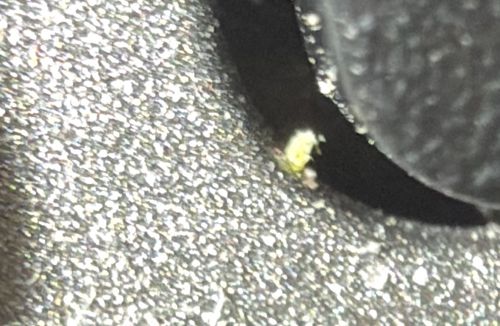
Aphid
Aphidoidea (Superfamily)
- Order & Family
- Hemiptera (Order), Aphididae (Family)
- Size
- Typically 1 to 5 millimeters in length, though some species may be slightly larger.
Natural Habitat
Primarily found on the undersides of leaves and stems of plants, both indoors and outdoors. They are common garden pests but can be brought inside on houseplants.
Diet & Feeding
Sap-suckers that feed on plant juices (phloem) using piercing-sucking mouthparts. They target soft, new growth on plants.
Behavior Patterns
They often cluster in large colonies on new plant growth. They excrete a sticky substance called 'honeydew' which can attract ants and cause sooty mold growth. Many species are capable of asexual reproduction, leading to rapid population explosions.
Risks & Benefits
Risks: Major agricultural and garden pest; can stunt plant growth, curl leaves, and transmit plant viruses. They are generally harmless to humans (do not bite or sting). Benefits: Serve as a food source for beneficial predators like ladybugs and lacewings.