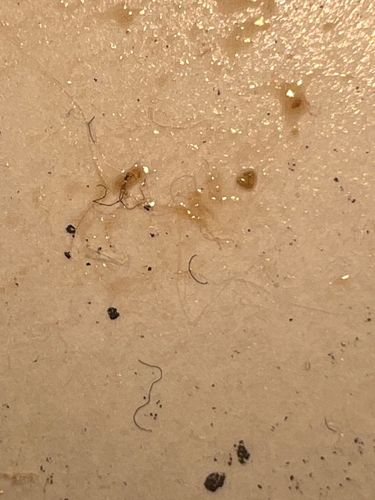
Pinworm
Scientific Name: Enterobius vermicularis
Order & Family: Order: Oxyurida, Family: Oxyuridae
Size: 2 to 13 millimeters (females are larger than males)
Natural Habitat
The human large intestine, specifically the cecum and appendix area.
Diet & Feeding
Intestinal contents and bacteria within the human host.
Behavior Patterns
The adult female migrates out of the anus at night to deposit thousands of eggs in the perianal folds, causing intense itching. Eggs are infectious for 2 to 3 weeks.
Risks & Benefits
Causes enterobiasis, characterized by perianal itching and restless sleep. While not typically dangerous, they are highly contagious within households. There are no ecological benefits to humans.
Identified on: 2/9/2026