
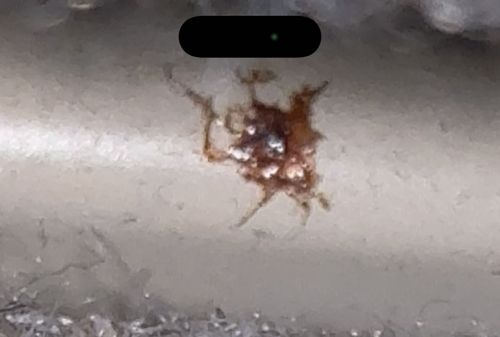
Community identification
Pubic Louse (also known as Crab Louse)
Pthirus pubis
- Order & Family
- Order: Psocodea, Family: Pthiridae
- Size
- 1.1 mm to 1.8 mm (roughly the size of a pinhead)
Natural Habitat
Exclusively found on human hosts, primarily in pubic and perianal hair, but can occasionally be found in eyelashes, eyebrows, beard, or chest hair.
Diet & Feeding
Obligate ectoparasite; feeds exclusively on human blood by biting and injecting saliva.
Behavior Patterns
They are relatively sedentary, clinging to hair shafts with their crab-like claws. They are primarily transmitted through close physical contact, particularly sexual contact. Unlike head lice, they do not hop or fly.
Risks & Benefits
Risks include intense itching (pruritus) due to allergic reactions to their saliva, and small bluish skin spots (maculae caeruleae). While they do not transmit major diseases, scratching can lead to secondary bacterial skin infections. They offer no benefits to the host or ecosystem.