
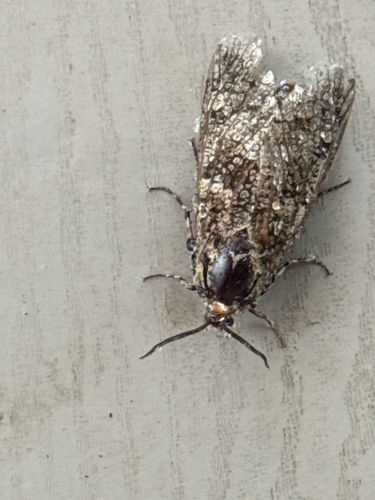
Community identification
Carpenterworm Moth
Prionoxystus robiniae
- Order & Family
- Lepidoptera: Cossidae
- Size
- Wingspan of 45 to 85 mm (males are smaller than females)
Natural Habitat
Deciduous forests, woodlands, and urban areas with host trees like oak, locust, and elm across North America.
Diet & Feeding
Adults do not feed as they have vestigial mouthparts. Larvae (caterpillars) bore into and eat the inner bark and heartwood of various hardwood trees.
Behavior Patterns
Nocturnal and attracted to lights. They have a 3-year life cycle in the north and a 1-2 year cycle in the south; larvae create large tunnels in wood as they grow. The adults are heavy-bodied and appear mottled for camouflage against tree bark.
Risks & Benefits
They are considered a minor timber pest because the larval tunneling can degrade the quality of wood for lumber and weaken tree structure. They serve as a food source for woodpeckers and other insectivores.