
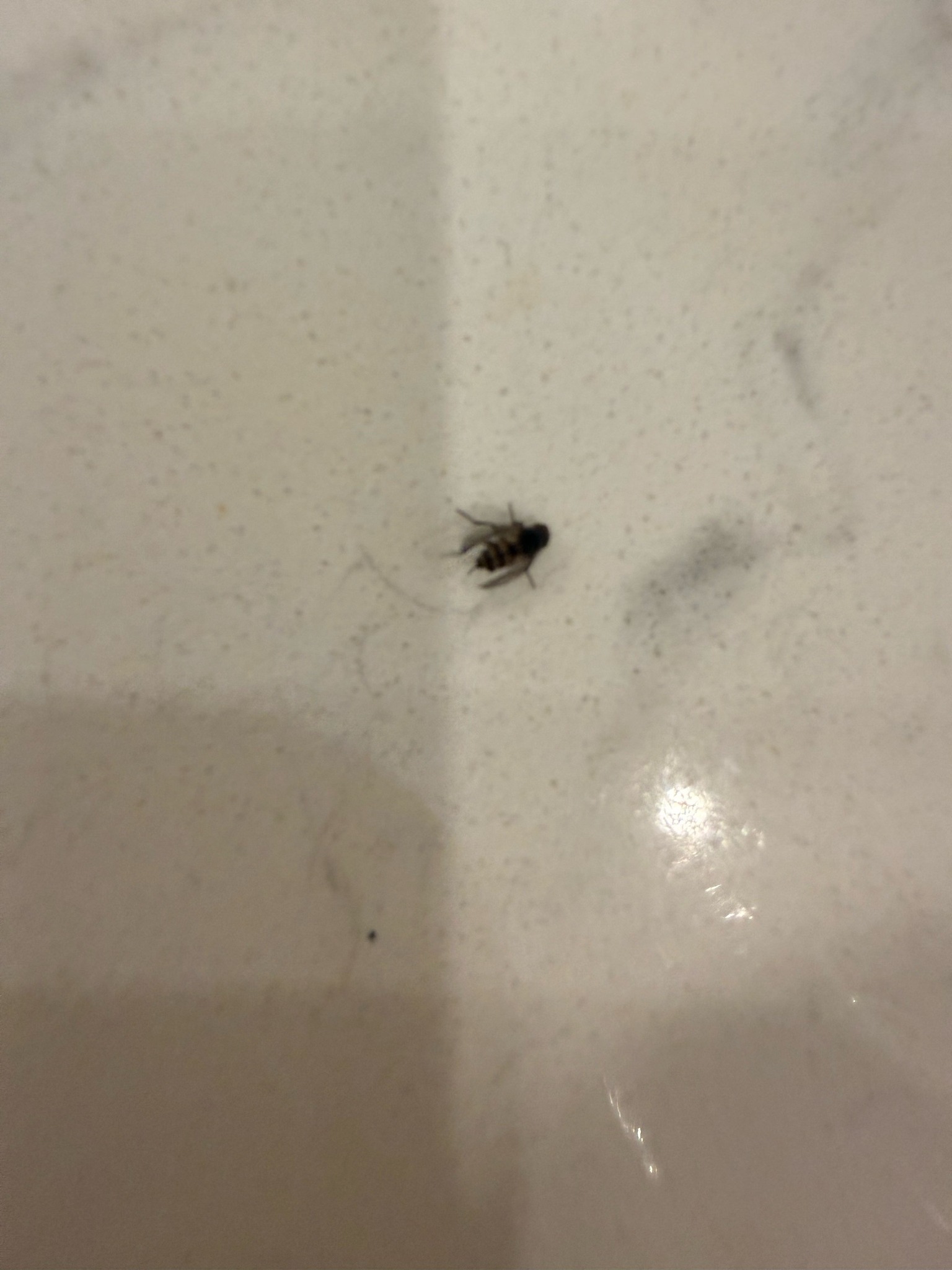
Community identification
Fruit Fly
Drosophila melanogaster
- Order & Family
- Order Diptera, Family Drosophilidae
- Size
- 3 to 4 mm in length
Natural Habitat
Commonly found in kitchens, restaurants, and grocery stores where overripe fruit or fermenting organic matter is present.
Diet & Feeding
Larvae and adults feed on fungi and the bacteria found on rotting fruits and other organic matter.
Behavior Patterns
They are attracted to the smell of fermentation. Females lay eggs on the surface of fermenting foods or in moist organic material. They have a very rapid life cycle, passing from egg to adult in about 8-10 days.
Risks & Benefits
While they do not bite, they are considered a nuisance and potential health risk because they can transfer bacteria and pathogens from dirty surfaces onto food. In science, they are highly beneficial as a primary model organism for genetic and developmental research.