
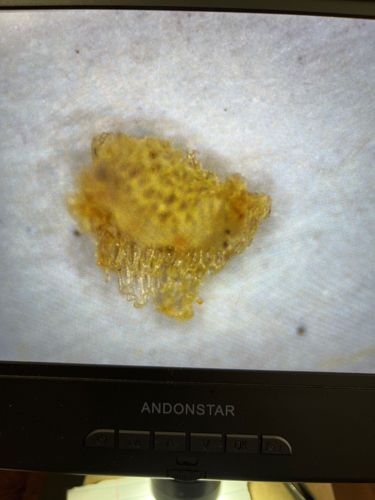
Lace Bug Nymph (or exuvia)
Family Tingidae (e.g., Stephanitis spp. or Corythucha spp.)
- Order & Family
- Hemiptera, Tingidae
- Size
- Nymphs are very small, usually "1-3mm", growing larger in subsequent instars before reaching adult size of "2-5mm". The image appears to be a shed skin (exuvia) or a very young nymph. Given the detailed structure visible, it is likely an exuvia.
Natural Habitat
Typically found on the undersides of leaves of various plants, often host-specific. They prefer sheltered locations on the foliage.
Diet & Feeding
Lace bugs are phytophagous, meaning they feed exclusively on plant sap. They insert their stylets into plant cells to extract chlorophyll and other contents, primarily from the undersides of leaves.
Behavior Patterns
Lace bug nymphs are generally sedentary, remaining clustered on the undersides of host plant leaves. They typically undergo 5 nymphal instars before molting into winged adults. This image, showing a translucent, net-like structure, strongly suggests it's an exuvia (shed skin) from a molting nymph. They often feed in groups, producing honeydew and dark, tar-like fecal spots on the leaves.
Risks & Benefits
Risks: Lace bugs are considered plant pests, especially in ornamental gardens, nurseries, and agricultural settings. Their feeding causes characteristic stippling, chlorosis (yellowing), and browning of leaves, which can reduce plant vigor, aesthetic value, and, in severe cases, lead to defoliation or plant death. Benefits: Generally, minimal direct benefits recognized by humans, but they are part of the broader ecosystem and may serve as a food source for some predatory insects.