Tapeworm Segment (Proglottid)
Scientific Name: Dipylidium caninum (most common species in pets)
Order & Family: Order: Cyclophyllidea, Family: Dipylidiidae
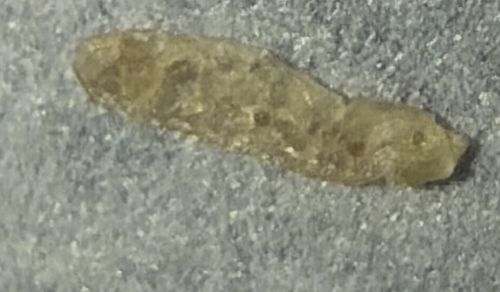
Size: 3 mm to 12 mm in length (roughly rice-grain or cucumber-seed sized)
Natural Habitat
Typically found on bedding, carpets, or fur of infected mammals (cats, dogs, humans). Adults live in the small intestine of the host.
Diet & Feeding
As an adult worm inside a host, it absorbs nutrients from the host's digestive tract. The dried segment shown contains eggs.
Behavior Patterns
Adult tapeworms release these proglottids laden with eggs in the host's feces. The segments are motile when fresh but dry out into hard, rice-like granules (like the one pictured) once outside the body.
Risks & Benefits
Risks: Indicates an intestinal parasite infection in a pet (or rarely a human). Requires a flea intermediate host, so it often signifies a flea infestation as well. Generally low risk to human health but unpleasant and requires medical treatment for the pet.
Identified on: 2/19/2026