
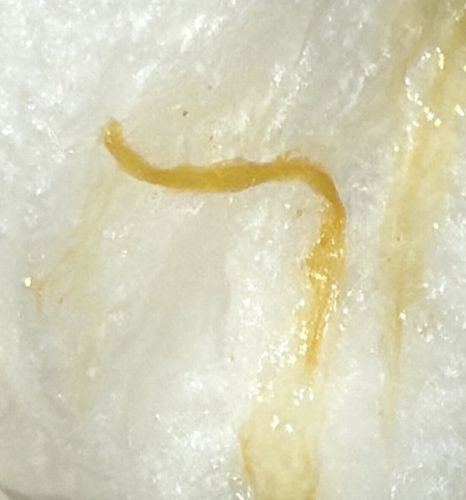
Community identification
Pinworm
Enterobius vermicularis
- Order & Family
- Order: Rhabditida, Family: Oxyuridae
- Size
- Females: 8-13 mm long; Males: 2-5 mm long.
Natural Habitat
The human large intestine, particularly the cecum and appendix, and the perennial area around the anus where eggs are deposited.
Diet & Feeding
They feed on intestinal content and cellular debris within the human digestive tract.
Behavior Patterns
The life cycle begins with egg ingestion. Larvae hatch in the small intestine and migrate to the large intestine. Gravid females migrate out of the anus at night to deposit eggs in the perianal folds, leading to intense itching and spread via the fecal-oral route.
Risks & Benefits
Risks: Causes enterobiasis, characterized by perianal itching (pruritus ani) and disturbed sleep. In severe cases or infestations, it can lead to secondary skin infections or appendix inflammation. There are no known benefits.